

healthy plate model.
for people with IBD. Your diet can change the microbiome
of your gut and possibly even cause inflammation. Aim to abide
by a balanced diet rich in fruit and vegetables, lean protein sources,
whole grains and fibre.
bloating, cramps, low energy or diarrhea. They can be different
for everyone. Common trigger foods include: high-fat, high-sugar
and high-fibre foods, spicy foods, and nuts, seeds and popcorn.
Write in the box given below
½ plate fruits and vegetbales
¼ carbohydrates (whole grains)
¼ lean protein sources




• Include fresh and whole foods as much as possible.
• Choose lean and plant-based protein sources most often.
• Limit highly processed foods.
• Cook at home when possible.
• Do not skip meals – aim for 3 meals and 2 snacks/day.

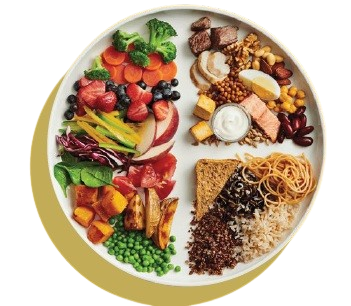







healthy plate model.
for people with IBD. Your diet can change the microbiome
of your gut and possibly even cause inflammation. Aim to abide
by a balanced diet rich in fruit and vegetables, lean protein sources,
whole grains and fibre.
bloating, cramps, low energy or diarrhea. They can be different
for everyone. Common trigger foods include: high-fat, high-sugar
and high-fibre foods, spicy foods, and nuts, seeds and popcorn.
Write in the box given below
½ plate fruits and vegetbales
¼ carbohydrates (whole grains)
¼ lean protein sources
• Include fresh and whole foods as much as possible.
• Choose lean and plant-based protein sources most often.
• Limit highly processed foods.
• Cook at home when possible.
• Do not skip meals – aim for 3 meals and 2 snacks/day.